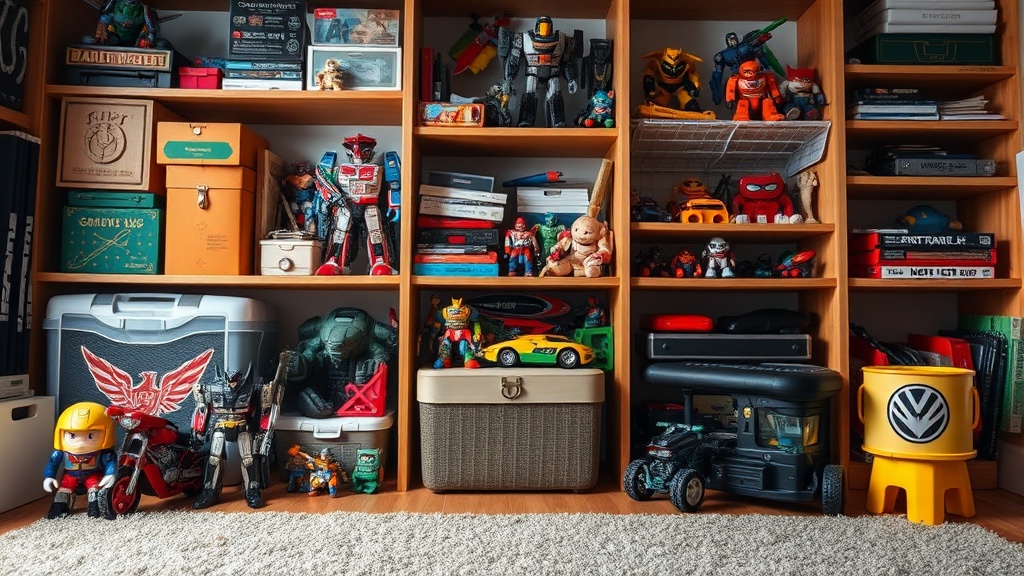
Organizing Your Toy Collection for Long-Term Value and Visibility

Why Most Collectors Fail at Organization
Many collectors believe that simply putting toys in a box or stacking them on a shelf is enough. They think that as long as the items are "there," the collection is organized. This is a mistake. True organization isn't about tidiness; it's about accessibility and preservation. If you have to dig through three plastic bins to find that one 1990s Disney figure, you aren't managing a collection—you're managing a mess. A poorly organized collection leads to unnecessary handling, which causes micro-scratches and surface wear. You'll also lose track of what you actually own, making it nearly impossible to inventory your assets for insurance or resale purposes.
This guide covers how to structure your physical and digital inventory systems. Whether you're dealing with a small shelf of premium figures or a massive basement of vintage plastic, the principles remain the same. We'll look at the physical layout of your space, the digital tracking of your items, and the environmental controls needed to keep your toys in top shape.
How do I categorize my toy collection effectively?
Categorization is the backbone of a high-quality collection. You shouldn't just group things by "size" or "color." Instead, consider these three primary methods of grouping:
- Era-Based Grouping: This is the gold standard for Happy Meal collectors. Grouping by decade (the 80s, 90s, or early 2000s) allows you to see the evolution of design and manufacturing.
- Brand/IP Grouping: If you have a massive collection of Star Wars or Disney-related toys, keeping these together makes sense for display purposes. It creates a cohesive visual narrative.
- Type-Based Grouping: This separates your "play-wear" toys from your "mint-in-box" items. You wouldn't want a loose, unpainted figure sitting next to a high-value, sealed collectible.
When choosing a method, ask yourself what your goal is. If you're a historian, go with era-based. If you're a visual enthusiast, go with brand-based. A mix of these methods—perhaps a branded collection organized by era—is often the most effective way to manage a large-scale inventory.
Which storage containers are best for plastic figures?
The container you choose can either save your collection or destroy it. Many people reach for cheap, airtight plastic bins, but these can actually trap moisture and cause "plasticizer migration." This is that dreaded phenomenon where the plastic becomes sticky or starts to degrade. To avoid this, look for archival-grade storage solutions.
For small figures, individual clear acrylic cases are the gold standard. They allow you to see the item from all angles without touching it. If you are storing larger items, use acid-free tissue paper or specialized polyethylene bags. Avoid using standard cardboard boxes for long-term storage; the acidity in the cardboard can yellow lighter-colored plastics over time. If you're looking for professional-grade storage supplies, checking out specialized hobby retailers like Hobby Lobby or local art supply stores can provide better options than a standard big-box retailer.
The Importance of a Digital Inventory
You can't manage what you don't track. A physical collection without a digital footprint is a liability. A spreadsheet is the bare minimum, but a dedicated database is much better. Your digital inventory should include the following data points for every item:
- Name/Description: Be specific (e.g., "1996 McDonald's Toy - Toy Story Buzz Lightyear").
- Condition: Use a scale (Mint, Near Mint, Good, Fair, Poor).
- Acquisition Date: When did it enter your collection?
- Purchase Price vs. Current Value: This helps you track the appreciation of your collection.
- Storage Location: Which bin or shelf is it currently on?
By maintaining this list, you'll be able to quickly identify duplicates or missing pieces. It also makes it much easier to sell items later. If someone asks for a specific piece, you can look it up in seconds rather than rummaging through boxes.
Can I display my toys without causing damage?
Displaying is the most rewarding part of collecting, but it's also the most dangerous. Sunlight is the enemy. UV rays break down the chemical bonds in plastic, leading to fading and brittleness. If your collection is sitting in a room with a large window, you are essentially watching your value drop in real-time. Use UV-filtering film on your windows or, better yet, move the collection to a room with controlled lighting.
LED lighting is your best friend here. Unlike incandescent bulbs, LEDs produce very little heat and minimal UV radiation. However, even with LEDs, you should avoid placing light sources too close to the figures. Excessive heat can cause certain types of plastic to warp or even melt over long periods. A well-lit display is great, but a way too hot display is a disaster. Check out resources like the Library of Congress for general preservation principles that apply to physical objects in many collections.
Remember, the goal is to create a balance between showing off your hard work and protecting your investment. A collector who prioritizes visibility over preservation often ends up with a collection that looks great for a year but falls apart in five. Keep your displays rotating, keep your light low, and keep your eyes on the details.
Common Mistakes to Avoid
The most common mistake I see is the "out of sight, out of mind" mentality. Just because you put a collection in a basement doesn't mean it's safe. Basements are prone to humidity spikes, which can lead to mold on packaging or even the degradation of the plastic itself. If you must store items in a basement or attic, ensure they are in airtight, non-acidic containers and kept in a climate-controlled area. Never assume a storage space is safe just because it's dry; humidity is a silent killer for vintage toy packaging.