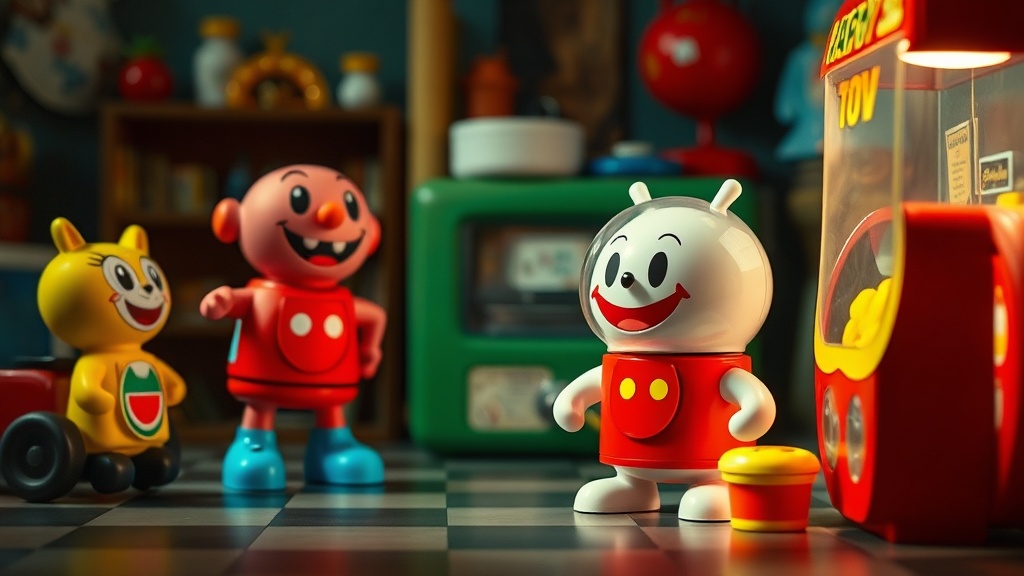
How to Start Your Vintage Happy Meal Toy Collection

This guide covers everything needed to build a vintage Happy Meal toy collection from scratch—where to hunt, what to pay, how to spot fakes, and which releases hold real value. Whether dusting off childhood memories or treating this as a serious investment, the collectible fast-food toy market has matured into a legitimate corner of the action figure and memorabilia world. McDonald's has produced over 15 billion toys since 1979, and certain vintage pieces now fetch hundreds (sometimes thousands) of dollars on the secondary market.
What Happy Meal Toys Are Actually Worth Collecting?
Not every plastic figurine appreciates in value. The most sought-after vintage Happy Meal toys fall into specific categories: limited regional releases, licensing anomalies, and pieces tied to cultural moments.
The 1987–1997 "Changeables" era produced some of the most mechanically interesting pieces—transforming food items into robots. The McRobots series (1992) remains popular among Transformers collectors who appreciate the same engineering philosophy on a budget. Ty Teenie Beanie Babies (1997–2000) sparked a national craze that crashed spectacularly, but sealed sets still command $50–$150 depending on the series.
The 1987 McDonald's Food Changeables (the original eight transforming items) typically sell for $20–$80 each in good condition. Power Rangers Turbo morphers (1997) hover around $15–$40. But the real prizes? The 1988 "McDonald's Halloween Pails" (the McBoo, McGhost, and McPumpkin buckets) in unused condition can reach $100–$300 depending on the variant.
The Disney 100th Anniversary figures (2023) won't be vintage for decades, but they're worth mentioning as a case study in manufactured scarcity—certain characters sold out in hours, creating immediate secondary market premiums.
Where Do You Find Authentic Vintage Happy Meal Toys?
Estate sales, Facebook Marketplace, and dedicated collector forums beat general auction sites for quality finds. Here's the thing—eBay works, but the fees and competition drive prices up. Savvy collectors build relationships at local estate sales where unsearched toy bins often sit ignored.
| Source | Average Price Range | Best For | Caveats |
|---|---|---|---|
| Estate Sales | $1–$15 per item | Bulk lots, sealed pieces | Requires time, hit-or-miss |
| Facebook Marketplace | $5–$30 per item | Local pickup, negotiation | Scammers exist; inspect first |
| eBay | $10–$100+ per item | Specific grails, graded items | Seller fees inflate prices |
| Collector Shows (like Toronto ToyCon) | $5–$200 per item | Authentication, community | Admission costs, travel |
| Reddit (r/HappyMealCollectors) | Trade/buy direct | Community knowledge | No buyer protection |
Thrift stores (Value Village, Goodwill) occasionally yield gold—but vintage Happy Meal toys get picked over fast by resellers who arrive at opening. Worth noting: the employees often know exactly what they're pricing now. The days of $0.99 vintage finds are largely gone.
Specialized dealers like Toys "R" Us (for contemporary releases) or Heritage Auctions (for high-end vintage) serve different needs. Heritage occasionally lists sealed case lots from the 1990s—expensive, but guaranteed authentic.
How Much Should You Pay for Vintage Happy Meal Toys?
Most loose vintage pieces in good condition sell for $5–$25. Sealed pieces command 2–5x premiums. Here's a realistic price breakdown based on 2024–2025 market data:
- Common loose figures (1990s–2000s): $3–$8
- Sealed common figures: $12–$25
- Semi-rare sets (complete, loose): $40–$80
- Sealed rare sets (Ty Beanie Babies Series 1): $100–$300
- Ultra-rare regional variants: $500+
The catch? Condition matters enormously. A 1992 McDonald's Batman Returns Penguin figure loose with paint wear might sell for $8. The same figure sealed in original bag with unpunched card? $75–$100. Serious collectors use the same grading standards as action figure collectors: C1 (poor) through C10 (mint).
Provenance adds value too. Pieces from Canadian releases often differ subtly from American versions—different paint apps, bilingual packaging, or exclusive characters. Maxime Fischer (this site's founder) has documented dozens of these regional variants in the reference archive. Canadian-market Teenie Beanie Babies with bilingual tags, for instance, sometimes outprice their English-only American counterparts.
How Do You Spot Counterfeit or Reproduction Happy Meal Toys?
Counterfeits plague the higher-end market, especially for Ty Beanie Babies and Disney collaborations. Authentic vintage Happy Meal toys have specific manufacturing tells.
Check the copyright markings on the underside or back. Genuine McDonald's toys from the 1980s–1990s typically read "©McDonald's Corp." with a year and often "Made in China" or "Made in Malaysia." The font should be crisp—blurry or missing markings suggest reproductions.
Plastic quality reveals fakes. Authentic pieces use specific ABS or PVC blends that feel substantial. Counterfeits often use cheaper, lightweight plastics that sound hollow when tapped. The color saturation differs too—fakes tend toward oversaturated or slightly "off" hues.
Sealed packaging offers authentication clues. Vintage McDonald's polybags from the 1980s–1990s use specific fold patterns and glue applications. Modern resealing attempts usually leave telltale wrinkles, double creases, or excessive glue residue. The typography on reproduction bags often uses slightly different fonts—compare against documented examples from collector databases.
For high-value purchases ($100+), consider third-party authentication through services like CGC (Certified Guaranty Company), which now grades and encapsulates vintage fast-food toys. The grading fee ($30–$50) pays for itself on four-figure pieces.
How Do You Store and Display a Happy Meal Toy Collection?
Proper storage prevents the plastic degradation that ruins value. UV light is the enemy—display cases near windows guarantee yellowing, especially on white plastics (common in the 1990s Ty Beanie Babies and Disney figures).
For loose pieces, acid-free plastic organizer boxes (the kind sold at Michael's or Container Store for bead storage) work beautifully. Individual compartments prevent scratching. Avoid rubber bands—they degrade and leave sticky residue.
Sealed pieces should stay sealed. The temptation to "check" a figure is strong. Resist. Opening a 30-year-old sealed package destroys 60–80% of the collectible value instantly. If the bag feels brittle, store it flat in a dark, climate-controlled space—attics and basements invite temperature swings that crack plastic.
Display options range from IKEA's DETOLF glass cabinets (affordable, widely used by collectors) to custom acrylic cases for premium pieces. LED strip lighting showcases colors without the UV damage of natural light.
Getting Started on a Budget
Start thematic, not random. Pick a franchise—Batman, Power Rangers, Disney, Hot Wheels—and build depth rather than scattered breadth. A focused collection of 20 related pieces tells a better story (and holds more resale value) than 200 random loose figures.
Set a monthly budget. $50–$100 monthly builds a respectable collection within a year. Patience wins. The same figure listed at $40 today might appear for $12 next month from a different seller.
Document everything. Photograph acquisitions. Record purchase prices. Maintain a spreadsheet with condition notes. This habit separates hobbyists from serious collectors—and proves invaluable for insurance purposes if the collection grows valuable.
The community matters. Toronto-area collectors (and those connected digitally) share leads, authenticate questionable pieces, and occasionally trade. Vintage fast-food toy collecting rewards those who participate rather than compete.
That said, this hobby rewards curiosity. Every sealed bag holds a tiny time capsule. Every complete set represents someone's childhood joy preserved in plastic. The hunt—estate sale mornings, late-night eBay scrolling, unexpected thrift store discoveries—delivers satisfactions that transcend the objects themselves.
Steps
- 1
Research Popular Sets and Identify High-Value Pieces
- 2
Source Authentic Vintage Toys from Trusted Sellers
- 3
Clean, Preserve, and Display Your Collection Properly