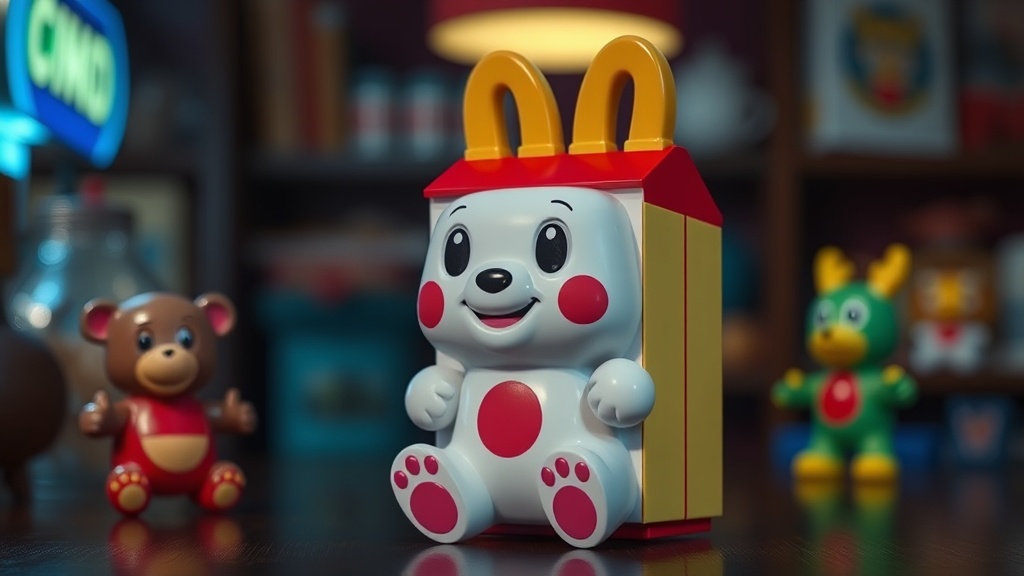
How Do You Spot a Counterfeit Happy Meal Toy Before It Ruins Your Collection?

You spot what looks like a 1985 Fry Kid at the flea market. The seller swears it's been in their attic since childhood. The colors seem right, the shape looks familiar—but something feels off when you pick it up. The plastic feels lighter than you remember. The paint edges blur where they should stay sharp. You've just encountered the reality every serious collector faces: counterfeits have flooded the Happy Meal toy market, and they're getting harder to spot.
Authentication isn't about paranoia—it's about protecting the value you've worked to build. A single reproduction piece mixed into a high-grade collection can destroy trust with buyers, reduce insurance valuations, and waste money that could have funded legitimate acquisitions. This guide walks through the physical inspection techniques that separate authentic vintage pieces from modern reproductions, the documentation you should demand for rare finds, and the specific red flags that even experienced collectors sometimes miss.
What Makes Modern Counterfeits So Difficult to Spot?
Twenty years ago, spotting a fake Happy Meal toy was straightforward—the plastic was wrong, the colors bled, and the mold lines were obvious. Today's reproduction factories operate with entirely different capabilities. Chinese manufacturing plants that once produced knockoff handbags now use the same injection molding equipment as legitimate toy factories. They've studied collector forums, examined auction records, and reverse-engineered the most valuable pieces.
The most sophisticated counterfeits come from molds created using 3D-scanned originals. When you examine these pieces, the overall dimensions match factory specs perfectly. The weight falls within acceptable ranges. Even the wear patterns look authentic because some unscrupulous sellers artificially age plastic using UV exposure and chemical treatments. (Yes—there are operations that tumble reproductions with sand and grit to simulate forty years of attic storage.)
What's changed most significantly is the packaging. Early counterfeits ignored bagged packaging entirely, selling loose toys only. Now reproductions include printed bags, cardboard backing, and even the thin plastic blister packs used in the 1980s and 1990s. The printing quality has improved dramatically—high-resolution scans of original packaging produce results that fool casual inspection. You'll need to examine microscopic details: the dot patterns in printed materials, the specific sheen of vintage plastic, and the chemical composition of adhesives used to seal bags.
Which Physical Details Reveal a Toy's True Origin?
Start with the plastic itself. Authentic vintage Happy Meal toys from the 1980s and 1990s used specific PVC and ABS formulations that aged in predictable ways. Genuine pieces develop a particular patina—surface oxidation creates microscopic texture changes that differ from artificial aging. Hold the toy under strong LED light and rotate it slowly. Authentic vintage plastic catches light differently; counterfeits often have a uniform glossiness that betrays their recent manufacture.
Examine the mold lines—the thin seams where injection mold halves meet. Factory-original toys from McDonald's suppliers (primarily Mattel, Hasbro, and Bandai during different eras) maintained strict quality standards. Mold lines on authentic pieces are clean, consistent, and positioned to minimize visibility. Reproductions often show flash—thin excess plastic along seams—or irregular lines that shift position. Run your fingernail across the seam; authentic pieces feel nearly smooth, while counterfeits often catch slightly.
Date stamps and manufacturer markings provide critical evidence—but only if you know what to look for. Legitimate toys include mold cavity numbers (usually small raised digits inside the piece or on the base) that indicate which specific production mold created the toy. Counterfeits sometimes omit these entirely or use inconsistent numbering. Check font consistency; McDonald's suppliers used specific typography for copyright marks and manufacturing dates. A 1987 date stamp using a modern sans-serif font is an immediate red flag. The depth of stamping matters too—original factory equipment applied consistent pressure. Reproductions often show shallow, uneven, or overly sharp impressions.
How Can You Verify Original Packaging?
The packaging tells stories that toys alone cannot. Authentic vintage Happy Meal bags and boxes came from specific printing houses with identifiable characteristics. Start with the paper stock—1980s packaging used heavier kraft paper or specific coated stocks that feel different from modern replacements. The folding patterns reveal production methods; original packaging was machine-folded with precise creases, while reproductions often show hand-folding irregularities or modern die-cut patterns.
Printing technology provides the most reliable authentication clues. Vintage flexographic and offset printing created specific dot patterns visible under magnification. Modern digital printing—even high-quality commercial work—produces different halftone patterns. If you have access to a jeweler's loupe or strong macro photography equipment, examine color transitions. Authentic vintage packaging shows rosette patterns in four-color printing; counterfeits often reveal stochastic dot patterns or inkjet printing artifacts. The color registration matters too—vintage printing occasionally shows slight misalignment between color plates, but reproductions sometimes show perfect registration that actually proves modern production.
Pay attention to the McDonald's logo evolution. The company updated its branding multiple times—the "M" stylization, the specific golden shade, and the tagline placement all changed across decades. A toy supposedly from 1984 bearing the "I'm Lovin' It" slogan (introduced in 2003) fails immediately. Similarly, copyright notices should match the era—earlier pieces used "McDonald's Corporation" in specific typographic treatments that differ from modern packaging. Cross-reference any questionable packaging against documented examples in collector archives or verified auction listings from Heritage Auctions.
When Should You Seek Professional Authentication?
Self-authentication works for most routine purchases, but certain situations demand professional verification. Any piece valued above $500 warrants third-party authentication—especially ungraded vintage sets like the 1984 McNugget Buddies prototypes or the 1995 Nickelodeon timepieces. Professional grading services (AFA—Action Figure Authority—and similar organizations) examine pieces under laboratory conditions, checking plastic composition via spectroscopy and verifying packaging authenticity against documented specimens. The cost—typically $50-150 per item—seems steep until you consider the insurance implications and resale value protection.
Documentation matters as much as the physical piece. Legitimate vintage toys often carry provenance—the documented history of ownership—that reproductions cannot fake. Estate sales with complete original receipts, promotional materials from McDonald's regional offices, or toys pulled directly from sealed case packs provide authentication that standalone pieces lack. When buying high-value items, demand provenance documentation. A 1990s Toy Story figure with the original McDonald's corporate distribution memo carries authentication value that a loose piece cannot match.
Consider authentication when adding to specialized sub-collections. International variants—Japanese-only releases, European promotional pieces, Australian test markets—face higher counterfeit rates because fewer collectors can spot regional differences. The Strong National Museum of Play maintains archives of international Happy Meal toy releases that authentication services reference. If your collection focuses on these rarer variants, build relationships with specialists who understand regional manufacturing differences. Japanese-market toys, for instance, used different plastic formulations and stricter paint application standards than North American equivalents—details that separate authentic pieces from convincing reproductions.
Building authentication skills takes time and mistakes—every collector has purchased questionable pieces early in their collecting life. The goal isn't paranoia but informed confidence. Start documenting your own collection's physical characteristics. Photograph mold markings, measure exact dimensions, and record weight measurements. When you encounter potential purchases, compare against your documented authentic pieces. Counterfeiters can replicate appearance, but they struggle to match the specific material density, surface aging, and manufacturing precision of authentic vintage production. Trust your hands and your eyes—when something feels wrong, it usually is.