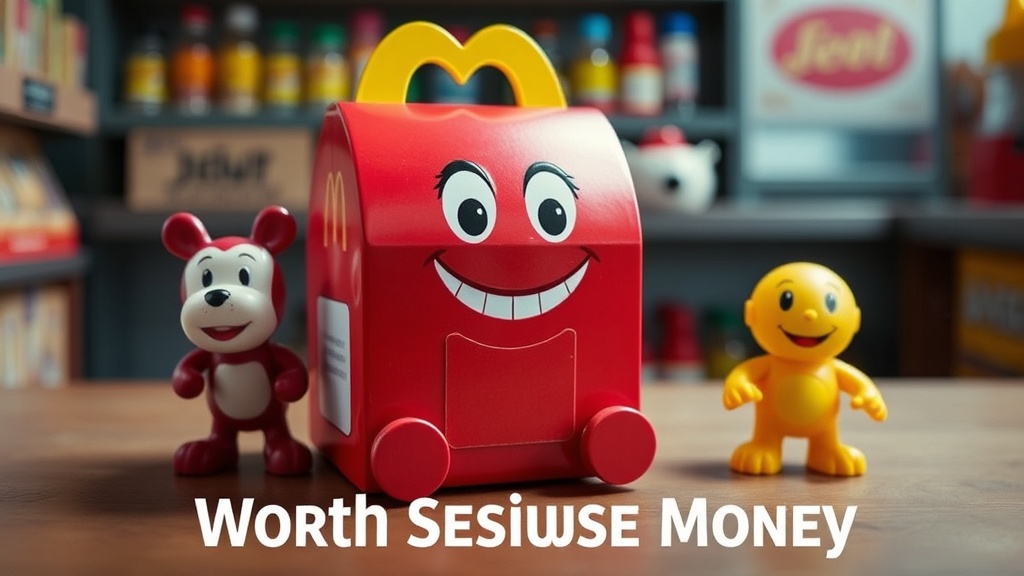
10 Most Valuable Vintage Happy Meal Toys Worth Serious Money

1995 Inspector Gadget Complete Set
1997 Ty Teenie Beanie Babies
1987 Changeables Transforming Food Toys
1996 101 Dalmatians Complete Collection
1992 McNugget Buddies Limited Editions
1988 McDonald's Food Fundamentals
1999 Ty Teenie Beanie Babies II
1984 McDonald's Character Plush Set
1994 Sonic the Hedgehog 3 Figures
1990s Mini Furby Keychains
What This Guide Covers (and Why It Matters)
Happy Meal toys aren't just childhood memories—they're a legitimate collectible market with serious money changing hands. This guide breaks down ten vintage McDonald's toys that collectors actually pay hundreds (sometimes thousands) of dollars for. Whether you're cleaning out an attic, hunting at flea markets, or just curious what that old plastic figurine might be worth, you'll find real numbers, condition factors, and what makes each piece valuable. No nostalgia trip here—just the facts collectors need to know.
Which Happy Meal Toys Are Actually Worth Money?
The valuable ones fall into specific categories: limited production runs, licensing mistakes, regional exclusives, and sets that never saw wide distribution. Condition matters enormously—a sealed toy in original packaging commands 5-10x more than a played-with loose figure. The most sought-after pieces come from the 1980s and early 1990s, when McDonald's experimented with higher-quality materials and complex designs that cost too much to mass-produce long-term.
1. The 1987 McDonald's Changeables (Transformers)
The first series of Changeables—food items that transformed into robots—hit stores in 1987. These weren't cheap plastic throwaways. McDonald's commissioned a proper engineering approach (unusual for fast-food toys), and the result was surprisingly sophisticated mechanisms. The Big Mac transformer remains the crown jewel, regularly selling for $150-$400 in sealed condition. Complete boxed sets? Those hit $800+ at auction.
The appeal isn't complicated—Transformers dominated toy shelves in the late 80s, and McDonald's captured that magic in a format kids could actually afford. Today, collectors hunt for the rare silver-color variants and the even scarcer "proto" versions that leaked into production.
2. 1995 Ty Teenie Beanie Babies
Everyone knows Beanie Babies. The 1995 Teenie Beanie promotion remains one of McDonald's most successful toy campaigns—over 100 million given away. Here's the thing: most aren't worth much. You can buy common Teenie Beanies for a few dollars at thrift stores.
But errors and early production runs? Different story. The "Peanut the Royal Blue Elephant" variant—mistakenly produced in dark blue instead of light blue—sells for $500-$2,000 depending on condition. Other valuable errors include misprinted tags, incorrect colors, and Canadian-exclusive versions with bilingual tags. The key is knowing what to look for. McDonald's official archives don't track these variants, which makes third-party authentication services like PSA grading important for serious sales.
3. The 1983 McDonald's Gift Certificates (Yes, Really)
Before toys became standard, McDonald's experimented with gift certificates as premiums. The 1983 Christmas-themed certificate booklets—specifically the ones featuring Ronald McDonald ice skating—now trade for $100-$300 each. Unredeemed booklets with original envelopes command premium prices.
The catch? These weren't technically "toys." They're paper collectibles, which makes condition grading different—creases, fading, and envelope damage hurt value significantly. Still, for completionists building full Happy Meal archives, these are must-haves.
4. 1992 Sonic the Hedgehog 3 Set
Sega and McDonald's partnered for a Sonic 3 promotion that never reached full distribution. The planned full set included Sonic, Tails, Knuckles, and Robotnik figures with pull-back motors. Production stopped early—estimates suggest fewer than 50,000 complete sets made it to restaurants.
Complete mint sets sell for $400-$900. Individual figures vary: Sonic ($80-$150), Tails ($100-$200), Knuckles ($150-$250), and Robotnik ($120-$180). The rarest piece is the "gold Sonic" variant, a color error that appeared briefly in Midwest locations. Only about 200 confirmed examples exist.
5. 1988 McDonald's Food Fundamentals
This strange educational set featured anthropomorphic food characters teaching nutrition. Professor Pinch (a lobster) and The Fruit Patrol sound ridiculous now—which is exactly why collectors want them. The weirdness factor drives prices.
Complete sets in original boxes sell for $200-$450. Individual figures range from $30-$80 depending on character rarity. Professor Pinch commands the highest prices because (according to collector lore) he was recalled in some markets for looking "too scary." Whether that's true or urban legend doesn't matter—prices reflect the story.
How Much Are McDonald's Toys Worth Today?
Values range from essentially worthless to genuinely investment-grade collectibles. The table below shows real market data from recent eBay sold listings and specialty auction houses:
| Toy/Set | Year | Loose (Good Condition) | Sealed/Mint | Notes |
|---|---|---|---|---|
| Changeables Series 1 (Big Mac) | 1987 | $40-$80 | $200-$400 | Silver variants add 50% premium |
| Ty Teenie Beanie (Peanut Blue Error) | 1995 | $200-$500 | $800-$2,000 | Must have error tag to qualify |
| Sonic 3 Complete Set | 1992 | $150-$300 | $400-$900 | Gold Sonic extremely rare |
| Food Fundamentals (Professor Pinch) | 1988 | $30-$60 | $100-$180 | Boxed sets preferred |
| Underwater Monsters | 1979 | $75-$150 | $300-$600 | First Happy Meal toy series |
| Disney Masterpiece Collection | 1996 | $50-$100 | $250-$500 | VHS case packaging adds value |
Worth noting: these prices fluctuate. The collectible market runs on trends, nostalgia cycles, and economic conditions. What's hot today might cool next year. That said, the rarest pieces—error variants, limited runs, and pristine sealed examples—tend to hold value better than common items.
6. 1979 Underwater Monsters
The first official Happy Meal toys. These simple rubber creatures (diving bells, sea monsters, submarines) launched an empire. Original pieces in any condition start around $50. Sealed versions? $300-$600 isn't unusual.
The historical significance drives pricing. These weren't just McDonald's first toys—they helped invent the modern kids' meal concept. Burger Chef had tried toy premiums before, but McDonald's scale and marketing turned Happy Meals into a cultural phenomenon. Early Underwater Monsters in original plastic bags with promotional paperwork represent the holy grail for serious collectors.
7. 1996 Disney Masterpiece Collection
McDonald's packaged these miniature Disney character figures in VHS-style cases, capitalizing on the booming home video market. The set covered classics: Snow White, Pinocchio, Dumbo, Cinderella, and others. Each figure came with a mini "video cover" insert.
Complete sets sell for $250-$500. Individual figures range $30-$80. The Belle figure from Beauty and the Beast commands premiums because (ironically) she was underproduced compared to other characters. Cases in mint condition—no cracks, clear plastic not yellowed—add significant value.
8. 1990 Super Mario Bros. 3
Nintendo and McDonald's partnered for what remains one of the most beloved fast-food toy sets. Eight figures featuring Mario, Luigi, and various power-ups. The Raccoon Mario figure leads pricing at $80-$150 sealed, followed by the rare Frog Mario variant ($100-$200).
The appeal is obvious—Mario defined 90s gaming. These toys arrived at peak Nintendo mania. Today, video game collectors who never cared about McDonald's specifically hunt these figures. Cross-category demand pushes prices higher than comparable non-gaming sets.
9. 1998 Tamagotchi Keychains
Virtual pets consumed playgrounds in the late 90s. McDonald's produced working mini-Tamagotchis as keychains—actual functional electronics, not just static figures. Four color variants exist: blue, red, yellow, and the rare transparent purple.
Working examples with fresh batteries (or original sealed batteries) sell for $60-$120. The transparent purple variant hits $200-$350. Dead electronics hurt value significantly—these weren't built to last 25+ years. Collectors debate whether to open sealed units to check functionality or preserve original packaging. Most serious collectors prefer sealed, gambling that the electronics work.
10. 1984 McDonald's Halloween Pails
Okay, not technically "toys"—but these plastic trick-or-treat buckets have become serious collectibles. The original 1984 set featured three designs: McGoblin, McPunk'n, and McBoo. McGoblin (green) commands highest prices due to lower production numbers.
Prices range wildly based on condition and completeness. A single pail with no lid? $15-$30. Complete set with original lids and stickers unused? $200-$400. The real money is in the ultra-rare "orange McGoblin" variant—possibly a production error, possibly a regional test—that sells for $800+ when authenticated.
Where Should You Sell Valuable Happy Meal Toys?
eBay remains the largest marketplace, with global reach and buyer protection. For high-value pieces ($500+), consider Heritage Auctions or Heritage's specialty toy division—they attract serious collectors willing to pay premiums for authenticated pieces. Facebook groups dedicated to McDonald's memorabilia offer faster sales but lower prices (no fees, though). Local toy shows and conventions work well for mid-range items where buyers want to inspect condition personally.
Authentication matters for expensive pieces. PSA and CGC now grade vintage fast-food toys, providing sealed cases that dramatically increase buyer confidence. Grading costs $25-$50 per item, so it's only worth it for pieces worth $100+.
What Hurts (and Helps) Happy Meal Toy Values?
Condition dominates everything. Here's the hierarchy: sealed in original packaging > mint loose with accessories > good condition loose > played-with condition > damaged. Packaging variations matter too—Canadian bilingual packaging, test market variations, and regional exclusives all command premiums.
Storage conditions from the 1980s and 90s create specific issues. Plastic yellowing, battery corrosion, sticker deterioration, and cardboard backing damage are common. Climate-controlled storage would have helped—but who stored Happy Meal toys in climate-controlled environments?
The market continues evolving. Nostalgia drives demand, and as 80s and 90s kids enter peak earning years, prices for childhood favorites keep climbing. New collectors enter monthly, many specifically hunting McDonald's items rather than general toy lines. For the rarest pieces—errors, prototypes, and pristine sealed examples—the supply simply doesn't exist to meet growing demand.